IN THE PURSUIT OF
EFFICIENCY
OUR MISSION
UBC Supermileage is a student engineering and design team that works to develop some of the most efficient vehicles humanity has ever built. We once held the world record, and we are working to win it back!
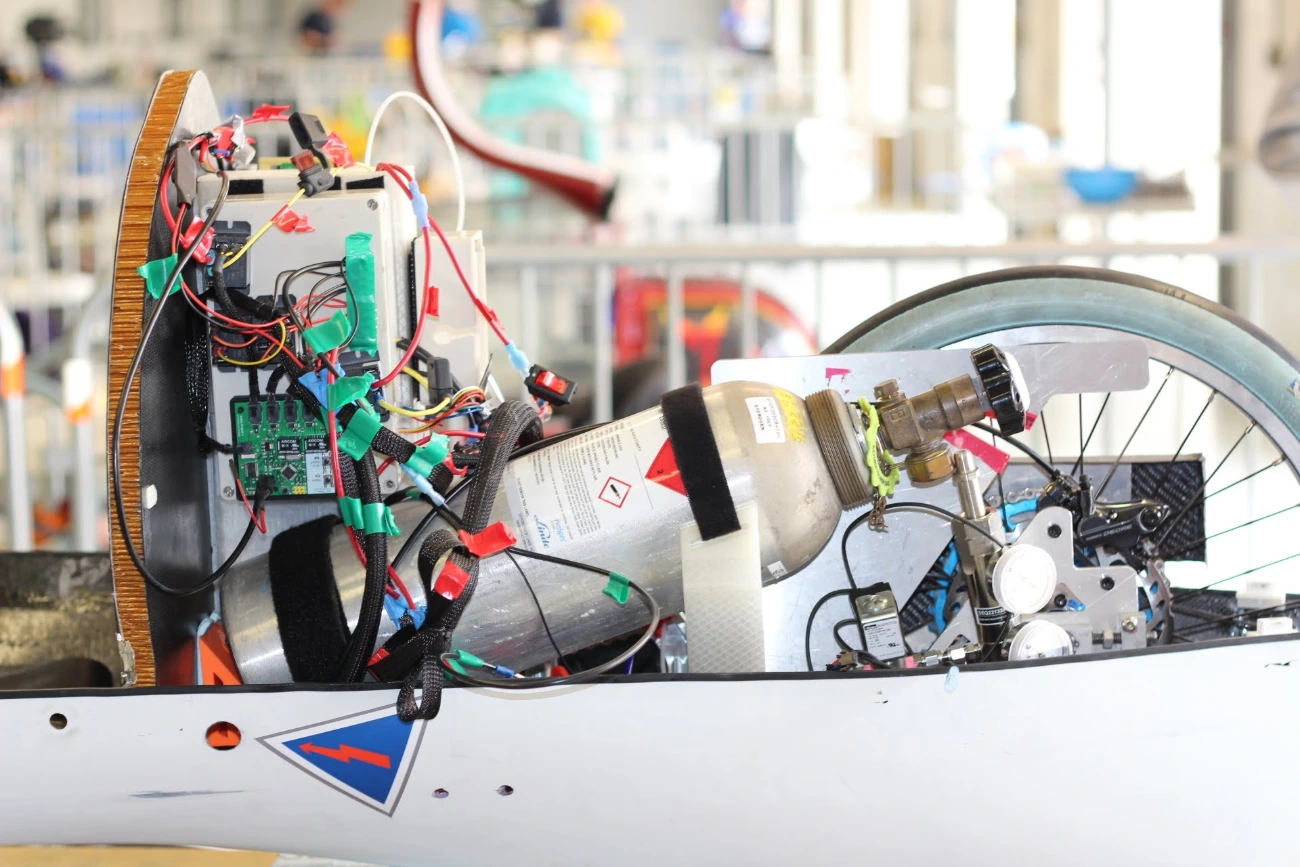
We provide a learning experience like none other, where students get to design, build and optimize vehicles with gasoline, battery electric, and hydrogen powertrains. Whether you are a student who wants to participate, or a sponsor who wants to be part of something great, we are excited to work with you!
est. 2001
UBC Supermileage was founded in 2001 by UBC engineering students Rob Mahaffey and Brian Jung. The goal of the team was to develop a highly fuel-efficient car to compete in the SAE Supermileage competition while providing an opportunity for student engineers to apply classroom theories to real-world problems.
The team started out small, with 6 students doing most of the organization, fundraising, design, fabrication, and assembly of the vehicle. The team’s small size compared to other UBC student teams did not prevent it from being successful at the competition, and in fact UBC Supermileage achieved a first-place position 4 years in a row, and the team record of 3145 mpg in 2006.
Record-
Breakers
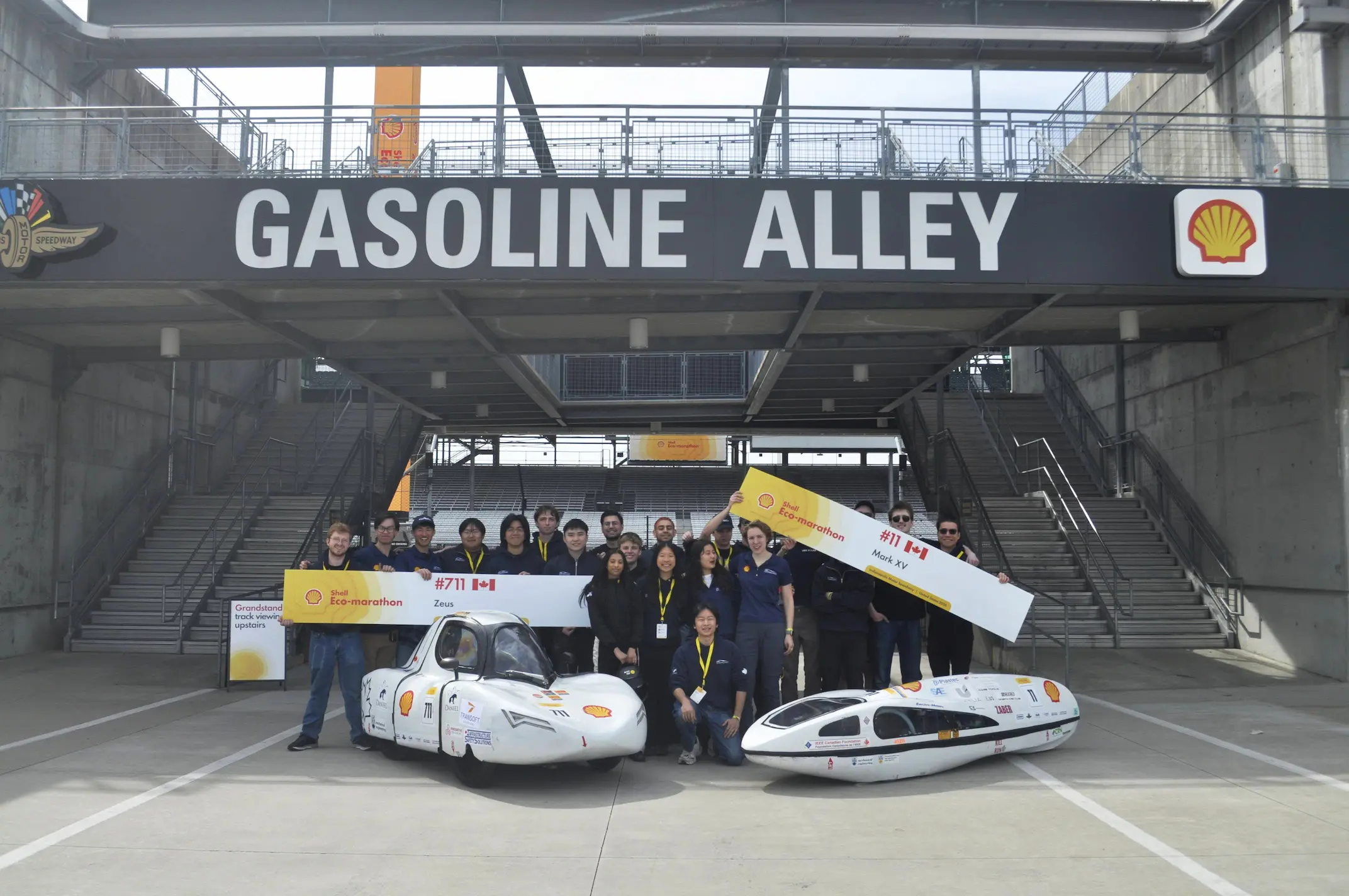
UBC Supermileage beat our own record to build the world record for the most efficient gasoline powered vehicle built anywhere in the world, by anyone—a title one of our vehicles held for five consecutive years.
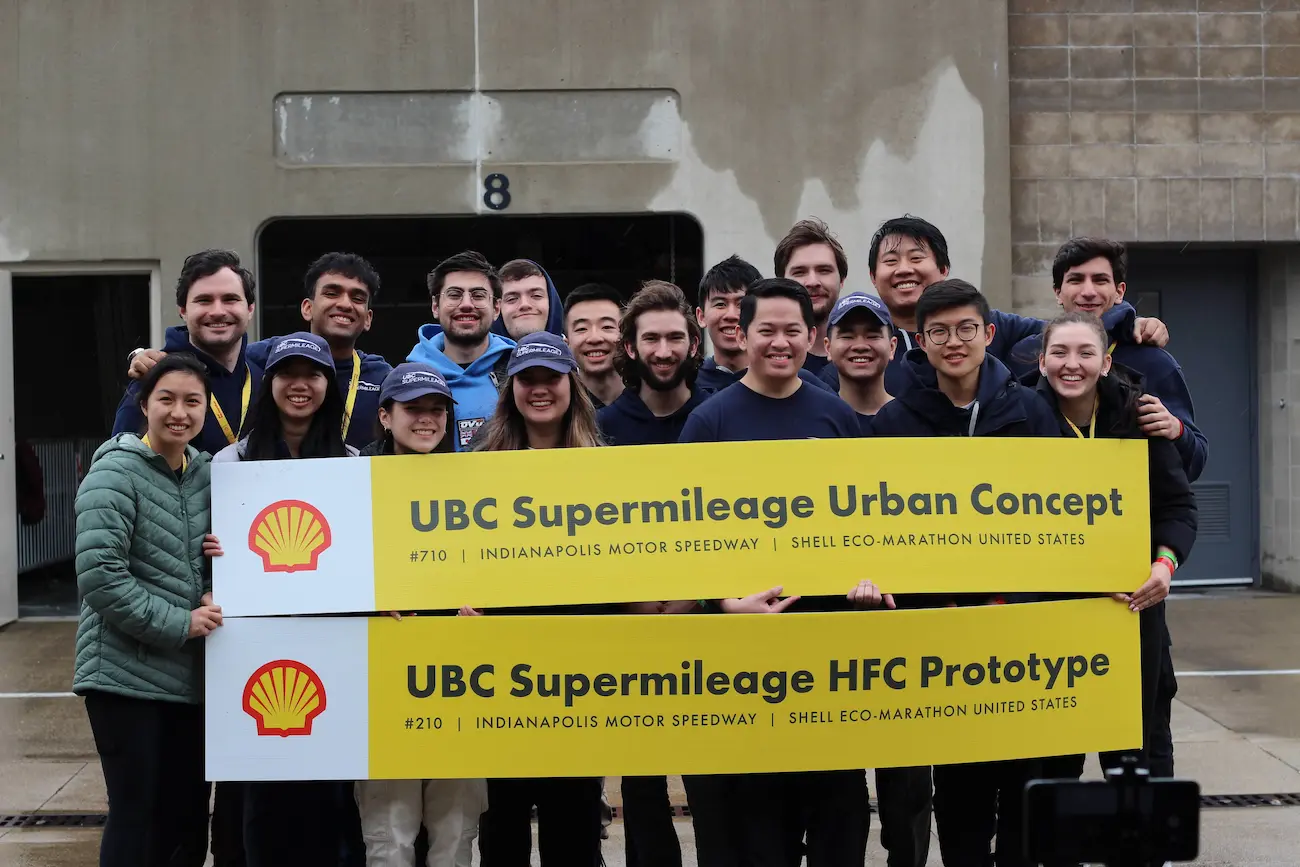
Our 70-student team has demonstrated UBC students are capable of great things, and we continue to push the envelope by bringing electric and hydrogen vehicles into the picture, alongside ambitious technical projects like custom engine blocks, custom FOC motor controllers, and new manufacturing methods for carbon fiber aerodynamics.
70
MEMBERS
RANKED FIRST
5 TIMES
THE
COMPETITION
Each year we bring our vehicles, drivers, and a support team to the Indy Motor Speedway in Indianapolis, USA to compete in the Shell Eco-Marathon (SEM). There, we compete against other schools and race our combustion engine, electric, and hydrogen cars in a contest of efficiency. Vehicles are subject to a series of requirements and tests, which are evaluated as part of a technical inspection. From there, the race is on, and the most efficient vehicle wins! Each powertrain type competes in its own category, and there are different categories for larger (Urban) vehicles and smaller (Prototype) vehicles as well.
URBAN
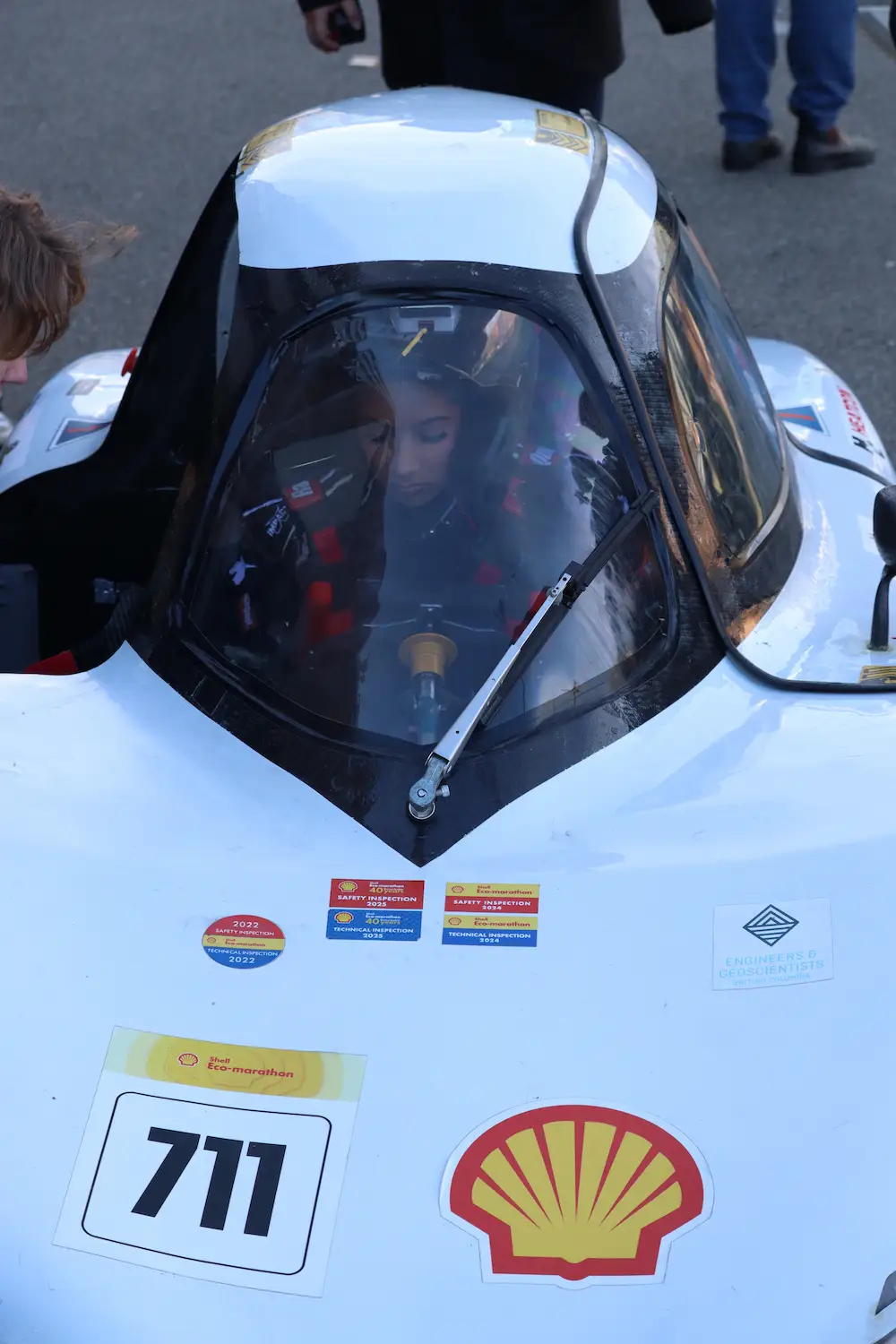
GAS
PROTOTYPE
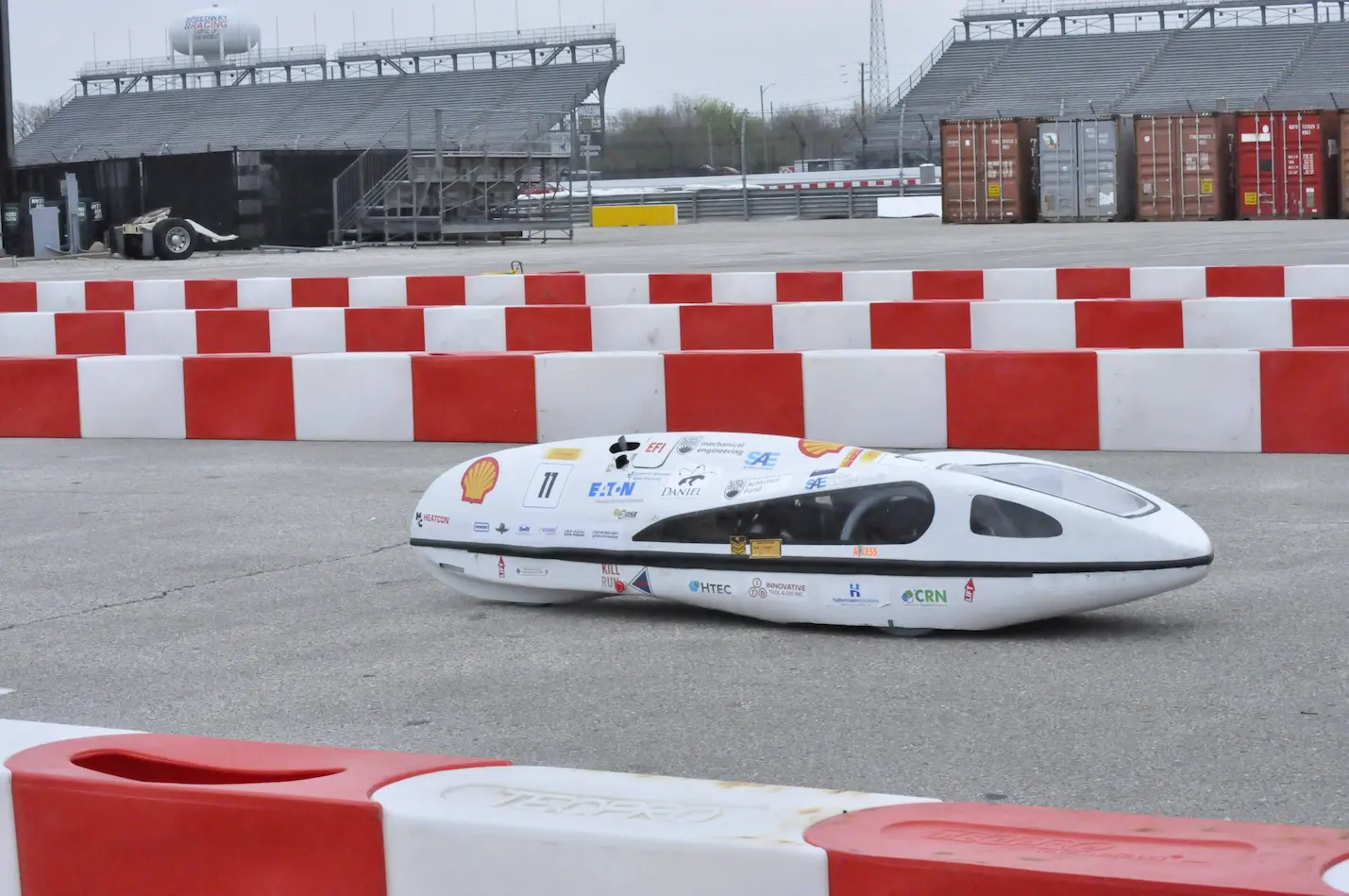
FUEL CELL PROTOTYPE
OUR SPONSORS
Thank you to our sponsors for supporting us!
PLATINUM TIER


GOLD TIER


SILVER TIER





BRONZE TIER




SELECT TIER